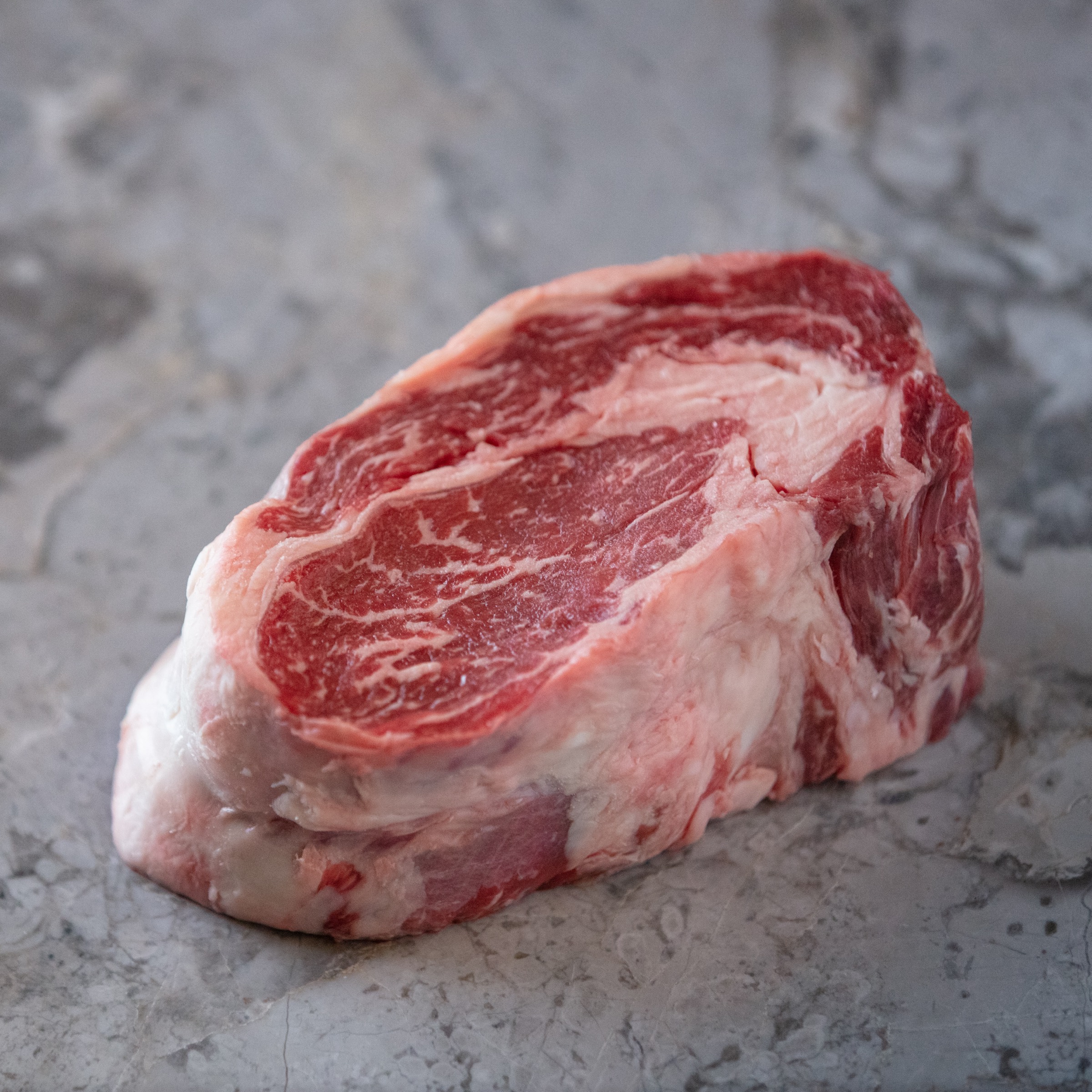
Marbling is the fine fat running inside a cut. Marble is named after it, and every cut is chosen by it: marbling before weight, provenance before price.
Marbling is the fine fat that runs inside a cut of meat, between its fibres rather than around them. It is also our name. Marble is not the stone and not the cake; it is marbling in meat: a certain level of quality, and a name that holds us to it every day.
What does Marble mean?
Marble is the stone, and marbling is the white lines in meat that look like its veins. When we chose the name in 2018 we were not looking for a pretty word; we were looking for a standard. We took the name from the heart of the cut, because marbling is the first thing we look at.
The Arabic word for it, «ترخيم», comes from «رخام», marble stone, and is the usual translation of marbling. Some people write it as it sounds: «ماربلنق». The meaning is the same: the fat that runs inside the meat.
The rule for every cut that enters our kitchen is short: marbling before weight, provenance before price.
Marbling: fat that melts over the fire
A cut of meat carries two kinds of fat. Outer fat covers the edges and can be trimmed. Inner fat spreads between the fibres in fine threads and flecks, and that is marbling.
On the fire, that inner fat melts slowly and runs through the meat. The result is three things: more flavour, more tenderness, and juice that stays in the cut. That is why a well-marbled cut can take high heat without drying out fast.
A leaner cut is not a bad cut, but it needs more care. Inner fat protects the meat from drying out; with less of it, the margin for error on the fire is smaller and timing matters more.
You can see marbling for yourself. When a steak reaches you, look at its cut face: the fine white threads through the red meat are the marbling. The finer and more widely spread they are, the richer the cut.
Marbling differs from muscle to muscle. Muscles that do little work, like the rib section at the top of the back, marble more than muscles that move all the time, like the chest and legs. That is why ribeye is known for its marbling, and why the beef chest needs long hours in the smoker to soften.
How marbling is graded
Marbling is read by eye on the cross-section of a cut. One of the best-known scales is the Beef Marbling Standard, or BMS, which comes from Japan and runs from 1 for a lean cut to 12 for an abundantly marbled one.
In the United States, the USDA grades beef as Prime, Choice and Select, from the top down, and marbling is one of the main things the grade rests on.
These scales help, but they are not enough alone. How the fat is spread matters as much as how much there is: fine threads through the whole cut are not the same as a few lumps on one side. That is where an expert eye comes in.
A higher grade does not mean a cut suits every dish. A very heavily marbled cut is rich and eaten in smaller portions; a moderately marbled one carries a bigger steak. Each cut has its use.
You can see the marbling scale itself on our home page, from lean to abundant.
Who reads the scale for us
At Marble the scale is read by Chef Abdulrahman Alsowailem, Marble's founder, a member of the International Beef Evaluation Committee and a judge at the World Steak Challenge in 2023. Every cut passes his eye before it touches the fire.
The chef looks at marbling first, then weight, and asks about provenance before price. That is what the name means in practice: every cut measured against the same standard. We call it consistency: the same flavour and texture on every visit, and in every batch we supply.
The name has a second meaning: marble endures. We do not chase trends and we do not change what our guests love. Our menu is short on purpose, and every dish on it has earned its place.
Marbling on our menu: the ribeye and the prime rib
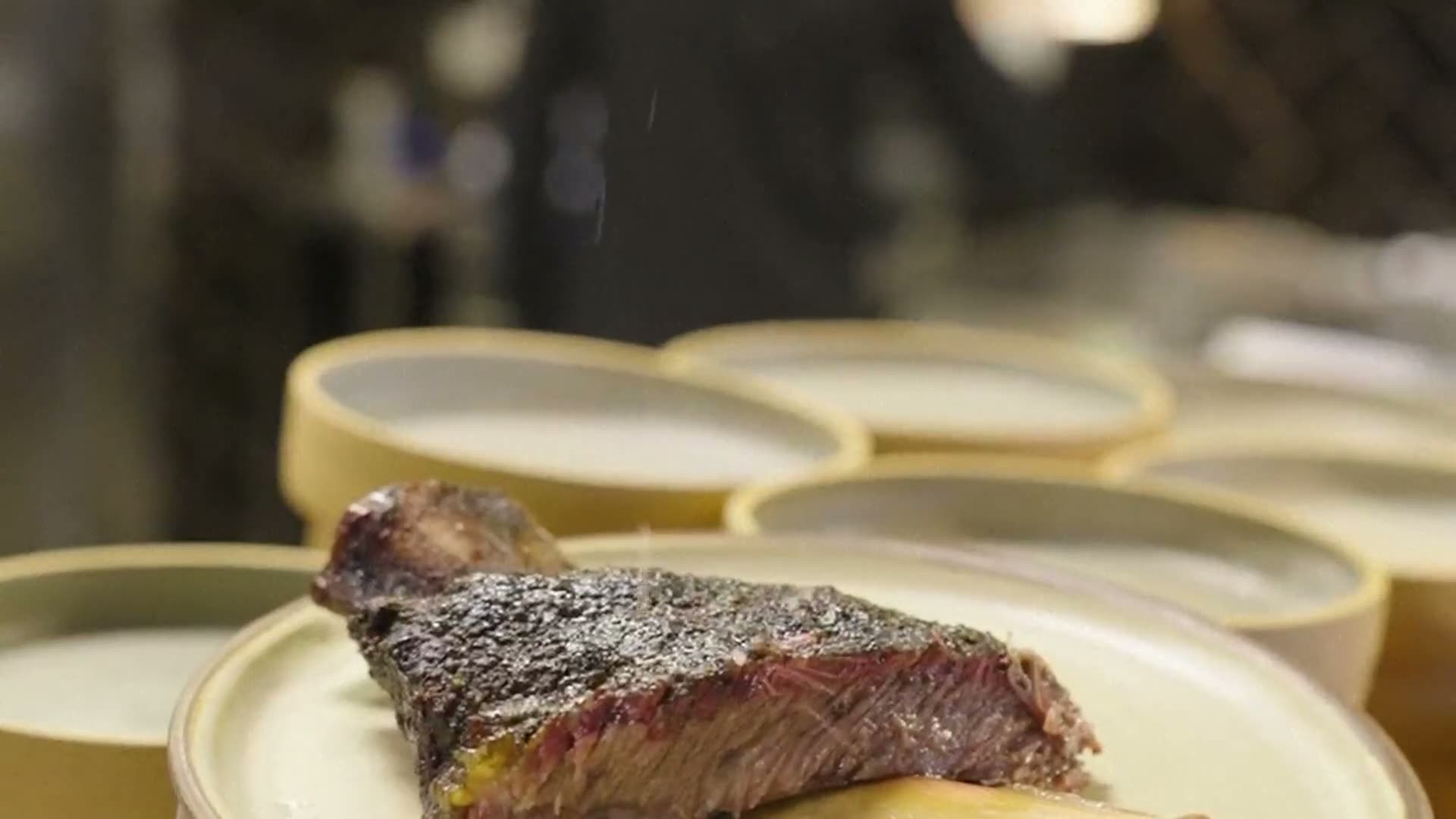
The clearest example is the ribeye steak: 350g seared over samar wood for the flavour of smoke, served with caramelised lemon and salt flakes. The fat inside the cut melts on the fire, and salt and lemon are enough.
The prime rib is 400g of ribeye over wood, served with mashed potato, mushroom sauce and kale. The filet mignon is a tenderloin cut, leaner and softer, served as 200g grilled over wood.
Between the two sits the striploin, in the miso steak over charcoal and the ponzu steak, 200g each. It comes from just behind the ribs, with less marbling than ribeye and a firmer bite.
Even the burger starts from the same idea: the Marble Burger is 180g of a blend of two prime cuts.
See the cuts on our steak page, read about the chef on our story page, and find current prices on the menu page. Then book your table on the reservations page.